

The Missing Middle
And why the next twenty years depend on its return.

I learned how policy actually gets made in Harrisburg, in Governor Tom Ridge’s Office of Public Policy. Every bill that moved required someone willing to walk it across the aisle. The work was unglamorous, and the people doing it were not famous. They knew that a strong economy and a functioning state depended on the middle recognizing that the world is gray, that you stop, listen, and learn before you form a perspective. Most of them would have called themselves moderates. A few would have called themselves something else entirely. They showed up the same way: open to the argument, prepared to lose a point in order to win the bill.
That middle is now missing.
The middle is not silent because it has nothing to say. The middle is silent because institutional consequence has raised the cost of speaking. The mechanism is not new. I wrote about it in 2022 when a Pennsylvania legislator was stripped of his agriculture committee assignments for voting his district instead of his party. The committee where he had the most to contribute became the committee he was barred from. His expertise was punished by the same leadership that needed it. His voice on that committee was unjustly silenced.
That mechanism has scaled. It now applies far beyond statehouses. Principled executives who refuse the binary framing of the moment learn quickly that the cost of nuance is the loss of audience. Principled writers learn that the algorithm rewards heat over light. Principled donors learn that supporting work across both sides of an issue invites coordinated attack from both sides. The people who once kept things working by refusing to play to the camera now choose silence as the least costly option available to them.
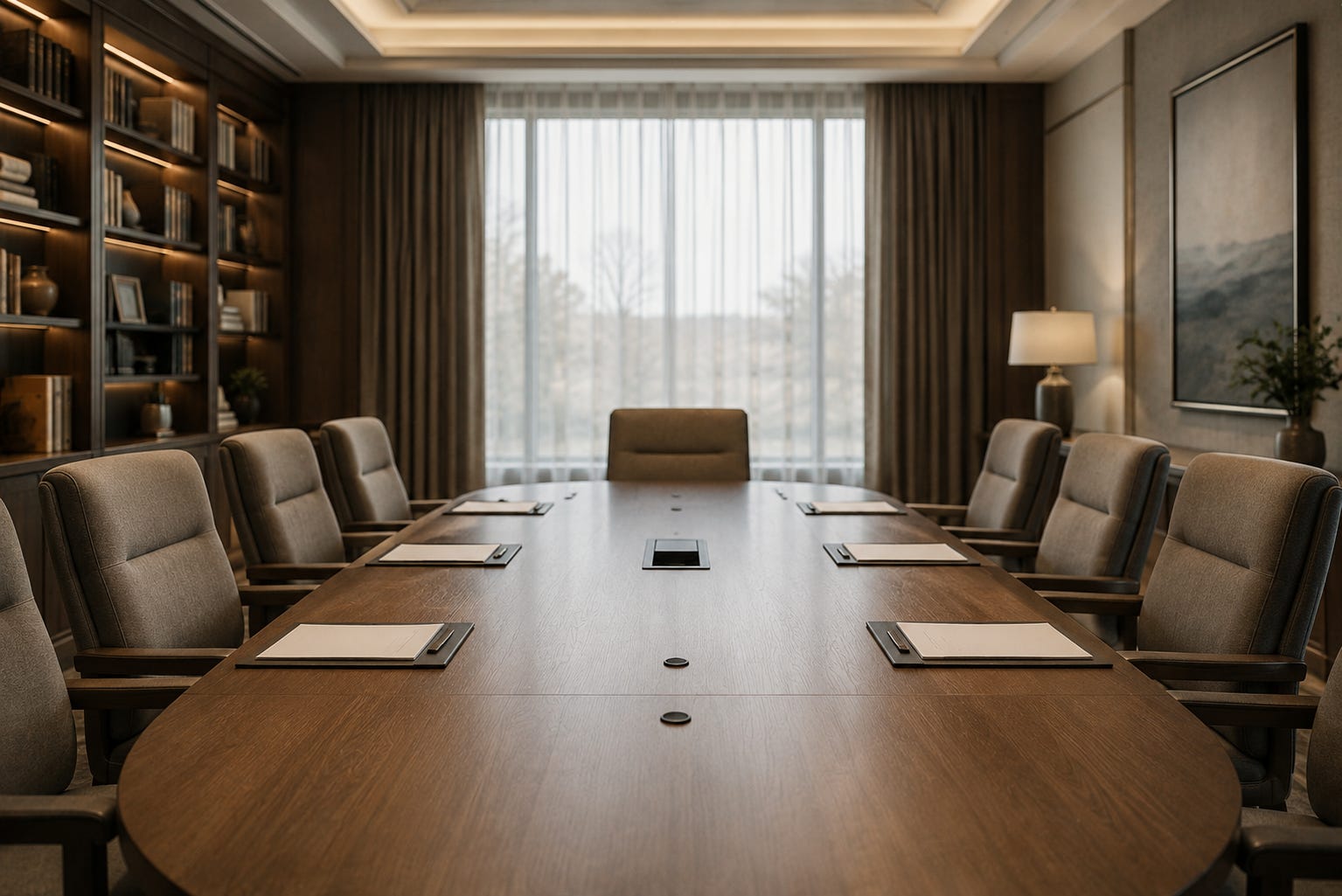
That is the missing middle. The room is not empty because no one wanted to be in it. The room is empty because the cost of standing in it became too high.
The cost is not abstract. It compounds wherever real decisions land.
Capital allocation gets worse. The investor who can hold two truths at once, who can see both the risk and the opportunity in the same trade, gets drowned out by the louder voice on either flank. Boards lose the directors who used to ask the third question, the one that did not fit the binary the meeting had set up. Governments lose the staffers and committee members who used to translate constituent reality into legislation. Companies that try to operate across borders lose the working assumption that made cross-border work possible in the first place: that people and businesses are not bound by the politics of their governments.
I have advised at the principal level for more than a decade now, in more than twenty countries. The pattern is consistent across all of them. The people who get the hardest decisions right tend to be the ones who refuse the cleanest framing. They take longer. They ask more questions. They are not always popular. They are almost always right in the end.
When they go quiet, the wrong answers win.
What happens if the missing middle stays missing through the next twenty years?
The structural decisions get made by people optimizing for noise instead of outcome. Capital flows toward the easiest narrative instead of the hardest opportunity. Policy gets written by the loudest constituency in any given quarter, then unwritten by the loudest constituency in the next. Boards become rubber stamps for management or for activists. Companies retreat from the global posture that made the last forty years of growth possible, and they retreat for reasons that look strategic in the short term and prove catastrophic in the long.
This is not a prediction. This is what already happens where the missing middle has fully gone quiet. The next twenty years will compound it unless enough of us decide to do something different.
I have said publicly, and I still believe, that in business strategy the middle of the road is where you get killed. That holds. When you watch your competitors, you stand with your competitors. When you carve your own path, your competitors watch you.
The middle of the road in public thought is a different middle. The middle of the road in public thought is where the work happens, because the middle is where you stop, listen, and learn before you form a perspective. One middle is following. The other middle is listening. Confusing them is part of how we got here.
The Stone Age did not end because we ran out of stones. It ended because of progress. The silence of the missing middle will not end because the algorithm changes. It will end because enough of us decide to speak anyway, in a voice that earns the right to be heard rather than the right to go viral.
That voice does not pretend the world is simple. It does not pretend both sides are equally right. It does not pretend that listening means agreeing. It means showing up to the argument with the discipline to say I have not made up my mind yet, and then doing the work to make it up honestly.
The next twenty years will be decided by who shows up to that work. I intend to show up. The UNWIND is part of that work.
Larisa Miller writes the UNWIND, a publication on the structural shifts shaping the next twenty years. CEO of Phoenix Global, a specialized global advisory firm. Author and award-winning keynote speaker.